Showing posts with label biofuel. Show all posts

30 Dec 2007

Stop the clear cutting of Woodlark Island for biofuel


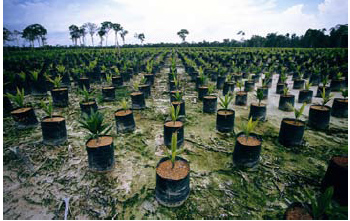
Well if it was all from the not so ample (or ample) arse of the Captain of the Earthrace who would complain, unfortunately the cheapest biofuel is from palm oil and the world is going through an orgy of forest destruction to get it. Everyday new reports come in of forests which are to be clear cut to make way for biofuel plantations, animals under threat and local people rioting to save their lives in the forests.

Papua New Guinea's government were up for the ethical politicians of the year 2008 award for their historic support for climate action...famously jeering the US delegation at Bali and shaming George Bush into support for climate action. Well they have blown their chance, tragically the PNG government have given the go ahead to log Woodlark Island for biofuel.

I am very pleased to have found the Rainforest Portal, there is more obviously to campaigning than sending letters, but the portal flags up all the current threats to rainforests and allows you to take action.

Here goes:

ALERT: Papua New Guinea's Woodlark Island Rainforests to Be Cleared for Oil Palm Agrofuels

TAKE ACTION: The PNG government continues to approve rainforest destruction and diminishment even as they vocally seek to be paid with carbon market funds for their "protection". The oil palm biofuel industry -- the scourge of Asia and the world's rainforests -- is continuing to expand into Papua New Guinea (PNG). Malaysian company Vitroplant has been granted necessary permits by the PNG government to begin clearing 70% of the rainforests on biodiversity rich Woodlark Island, some 60,000 hectares, in order to establish a massive plantation of oil palm trees.

Expansion of oil palm plantations at the expense of primary rainforests runs contrary to PNG's government public support for preserving rainforests for climate and other benefits. An oil palm plantation on Woodlark Island will endanger the island’s flora and fauna, cause environmental upheaval, and result in drastic cultural change. The islanders of Woodlark have worked hard to draw international attention to this issue, and have issued an appeal for the support of international NGOs and citizens to pressure the government to withdraw the project.
TAKE ACTION

There is another excellent report here:


While obviously concerned about environmental damage, Dr. Damon is even more worried about how the palm plantations will affect the unique island culture. He describes the island as one in which humans and animals have lived together in synthesis for millennia. The Woodlark Islanders live off subsistence gardening, herding wild pigs, and occasional hunting. Dr. Damon states that while the islanders are also dependent on rice from abroad, "there remains on the island something of a unique example of a regional social and ecological system that supported human and other life for 2000 and more years." While the island appears wild, few places have been untouched by humans: "areas regularly cut for gardens—fields—were systematically marked by much higher stands of forest that were to be left uncut. There the [Woodlark Cuscus] slept during the day; and there they would be sought the few months of the year when they were valued for their meat and fat; pigs and fish, of course, were vastly preferred... People regularly burned small plots of that larger area to maintain small meadows. These meadows were places for wild pigs to hang out during droughts or floods, tend their young, and hide from humans when the latter sought them for food... Both the high forests and these meadows are associated with sago orchards, which also seem wild, but which are also part of a management strategy effected on this island. The sago was also cut and harvested so that roughly two meters of each tree cut would be left as food for the 'wild' pigs." These management practices of the island’s resources, which may seem unconventional, have left a healthy population of cuscus, wild pigs, humans, and the forests that contain so much other bio-diversity.

7 Dec 2007

Forest people barred from Bali climate conference


Projects like REDD (Reducing Emissions from
Deforestation in Developing countries) sound very nice but they are trashing
our indigenous lands. People are being relocated and even killed; my own
people will soon be under water. That's why I call the money from the
projects blood money,"


Solutions to climate change are currently about buying and selling carbon and worst of all enclosing indigenous land, killing forests in the name of ecology and wrecking the lives of those who live most ecologically.


Serious green politics is about fighting this bloodshed, personality based environmentalism, 'green' consumerism and the official framework are still taking us towards destruction.

today's Economist argues that food prices are already rising because of biofuels

But the rise in prices is also the self-inflicted result of America's reckless ethanol subsidies. This year biofuels will take a third of America's (record) maize harvest. That affects food markets directly: fill up an SUV's fuel tank with ethanol and you have used enough maize to feed a person for a year. And it affects them indirectly, as farmers switch to maize from other crops. The 30m tonnes of extra maize going to ethanol this year amounts to half the fall in the world's overall grain stocks.


...see you all on the 10.30am December 8th demo at Regents Street (tesco metro) against the menace of biofuels


(forwarded on behalf of Hubertus Samangun, Indigenous Focal Point withrequest to forward widely)
7 December 2007

Indigenous Peoples Protest UNFCCC Indigenous Peoples shut out of Climate Change Negotiations

Nusa Dua, Bali, Indonesia- Indigenous peoples representing regions fromaround the world protested outside the climate negotiations today wearing symbolic gags that read UNFCCC, the acronym of the United Nations Framework Convention on Climate Change, symbolizing their systematic exclusion fromthe UN meeting. Yesterday a delegation of indigenous peoples was forcibly barred from entering the meeting between UNFCCC Executive Secretary Yvo de Boer and civil society representatives, despite the fact that the indigenousdelegation was invited to attend. This act is representative of the systematic exclusion of indigenous peoples in the UNFCCC process. "There is no seat or name plate for indigenous peoples in the plenary, norfor the United Nations Permanent Forum on Indigenous Issues, the highest level body in the United Nations that addresses indigenous peoples rights,"stated Hubertus Samangun, the Focal Point of the Indigenous Peoples delegation to the UNFCCC and the Focal Point for English Speaking Indigenous Peoples of the Global Forest Coalition. "Indigenous peoples are not only marginalized from the discussion, but thereis virtually no mention of indigenous peoples in the more that 5 millionwords of UNFCCC documents," argued Alfred Ilenre of the Edo People ofNigeria. This is occurring despite the fact that indigenous peoples are suffering the most from climate change and climate change mitigation projects thatdirectly impact their lands. Indigenous peoples are here in Bali to denounce the false solutions to climate change proposed by the United Nations such as carbon trading,agrofuels and so-called "avoided deforestation" that devastate their lands and cause human rights violations. "This process has become nothing but developed countries avoiding theirresponsibilities to cut emissions and pushing the responsibility on to developing countries," stated Fiu Mata'ese Elisara-Laula, of the O LeSiosiomaga Society of Samoa. "Projects like REDD (Reducing Emissions from
Deforestation in Developing countries) sound very nice but they are trashing
our indigenous lands. People are being relocated and even killed; my own
people will soon be under water. That's why I call the money from the
projects blood money," he added. Marcial Arias of the Kuna People of Panama reminded the international community that indigenous peoples' right to participate was recognized inthe Earth Summit in 1992 and reaffirmed this year. "On September 13th ofthis year, the United Nations General Assembly adopted the UN Declaration on
the Rights of Indigenous Peoples [1] which enshrines the fundamental human rights of indigenous peoples to their lands, territories and environment. It is precisely these rights recognized by the UN itself that the UNFCCC isviolating," he explained.

Contact: Hubertus Samangun, Indigenous Focal Point to the UNFCCC(Bahasa, English) 0813-1077-8918 Orin Langelle, Global Forest Coalition Media Coordinator0813-3895-9742 (English) (photos available upon request)

Notes: [1] http://www.un.org/esa/socdev/unpfii/en/declaration.html

5 Dec 2007

Bali babylon


Greenpeace blocks shipment of Indonesian palm oil
Friday, November 16th, 2007
Thu Nov 15, 2007JAKARTA (Reuters) - Greenpeace has blocked a tanker carrying more than 30,000 tonnes of palm oil from leaving an Indonesian port to protest against forest destruction blamed on plantations, the environmental group said on Thursday.

The protest came less than three weeks before a U.N. climate change meeting on the resort island of Bali, where delegates from 189 countries will debate ways to slow down global warming, including the impact of dwindling tropical rainforests.
from here

Michelle Desilets, director of the Borneo Orang Utan Survival Foundation UK, said: 'They are left hungry so they go in search of food in the plantations and destroy the plants. They become easy targets. Some plantation owners put a bounty of $10 or $20 on the head of orangutans, which is worth a few weeks' salary for the workers.

'Workers don't usually have guns: the orang utans that get shot are the lucky ones. We've seen them beaten to death with wood sticks or iron bars, doused in petrol and set on fire, trussed up in nets or tied up with wire which cuts through their flesh. Often a mother is killed and eaten while its baby is sold on or kept as a pet. In the local plantations where we're working, the managers have now agreed not to offer the bonus. But there's still a macho thing about bringing down an adult male.'
more here.


Well now the bonobos having let slip that they are more intelligent than us, are in trouble, their plans to take over Terra when we the hairless monkies fuck up big time look less secure. In chimpanzee politics never reveal your hand too early or be too enthusiastic about your plans for power, showing you can count faster than students has obviously done a lot for the pride of the pride but is clearly a mistake.

The Oran Utangs sadly look on the way to extinction and yes the margarine at your supermarket and the biofuel in your bus are pushing them out. Huge areas of rainforest in Indonesia are being clear cut for palm oil plantations and palm will fuel the global fleet of motor vehicles after peak oil.

Every biofuel bus ticket bought is a bullet in the head of orangs whose habitat is disappering fast.

Green Parties should think about people, planet and other species, looking after each is looking after all.

Indonesia clear cutting and draining of marshes is one of the biggest sources of climate change gases.

We need to freeze the destruction and give local people and the orangs power over the forests.

Supporting the Free Papua Movement is essential, the Indonesians invaded West Papua in the 1970s and have cut and cut away at the forests.

lots to do from speaking out against biofuels and rejecting use of palm oil in processed food.

The WWF noted 'Orangutans are shot when they enter some oil palm estates'.

Animal rights, human liberation, one struggle, one fight.

WSPA appeal for orang utan sanctury here.

WWF note these interesting facts about our ginger friends under threat:
Some captive released individuals learned independently to untie complex knots that secured boats and rafts, and then to shove off, board, and ride the vessels across rivers.

Wild orangutans have also been observed making tools to scratch themselves, using leafy branches to shelter under, and using branches for foraging, honey collection etc. Released captive individuals are reported to use sticks for digging, fighting, prying, eating, scratching, and many other purposes.


Save the Orang utans site here

Imperialism Is the Arsonist: Marxism’s Contribution to Ecological Literatures and Struggles

Derek Wall ’s article entitled  Imperialism Is the Arsonist: Marxism’s Contribution to Ecological Literatures and Struggles , argues that Ma...